Baa Baa Black Sheep Lyrics – Full Text, History and True Meaning
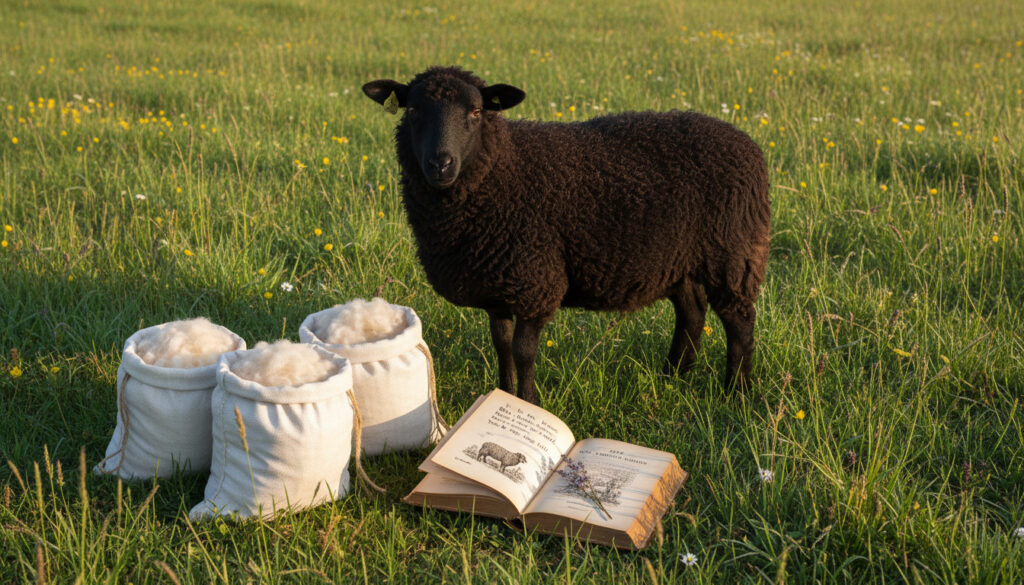
“Baa, Baa, Black Sheep” has echoed through English-speaking childhoods for nearly three centuries. The nursery rhyme first appeared in print around 1744, depicting a black sheep distributing three bags of wool to a master, a dame, and a little boy. Despite its simple structure, the verse carries layers of historical speculation, from medieval taxation resentment to modern debates about racial imagery.
The rhyme belongs to the canon of traditional English nursery songs taught to toddlers worldwide. Its call-and-response structure and repetitive vowel sounds make it ideal for early language acquisition. Yet beneath the pastoral imagery lies a contested history involving economic exploitation and scholarly disagreement.
Parents searching for the complete lyrics or wondering about the dark “meaning” behind the verse will find the answers rooted more in wool exports than in mystery. The following examination separates documented publication history from folk etymology.
What Are the Lyrics to Baa Baa Black Sheep?
Traditional Lyrics
Baa, baa, black sheep,
Have you any wool?
Yes, sir, yes, sir,
Three bags full.
Common Interpretation
Wool tax theory: resentment over medieval taxation under Edward I, where farmers surrendered portions to the crown and church.
First Publication
Circa 1744 in Tommy Thumb’s Pretty Song Book, making it one of the oldest documented English nursery rhymes.
Noted Variations
An alleged variant ends with “And none for the little boy,” though this lacks primary source verification.
Key Insights
- The rhyme first appeared in print in approximately 1744, predating the Mother Goose collections.
- Lyrics have remained remarkably stable for nearly 280 years, with only minor dialect shifts.
- The “wool tax” interpretation emerged in 1930, centuries after the rhyme’s first printing.
- No historical evidence supports claims connecting the rhyme to slavery or the Atlantic slave trade.
- Black sheep historically produced rare, valuable wool that required no dyeing.
- The structure follows a classic question-and-answer format common to counting and animal sound rhymes.
- Modern educational settings sometimes alter “black” to “rainbow” or omit the color entirely.
| Attribute | Details |
|---|---|
| Original Title | “Bah, Bah, a black Sheep” |
| First Printed | c. 1744 in Tommy Thumb’s Pretty Song Book |
| Author | Unknown (Traditional/Anonymous) |
| Structure | 8 lines, call-and-response |
| Recipients of Wool | Master, Dame, Little Boy |
| Historical Theory | Edward I’s wool tax (1275) |
| Alternative Theory | Phonetic teaching tool for children |
| Modern Controversy | 1980s racial reinterpretation (unverified) |
What Is the Meaning Behind Baa Baa Black Sheep?
The dominant scholarly interpretation connects the three bags of wool to medieval taxation schemes. According to this theory, the “master” represents the king, the “dame” represents the church, and the “little boy” represents the common farmer or shepherd left with little after obligations were met.
What Does “One for the Master” Mean?
In 1275, King Edward I imposed the “Great Custom” or “Old Custom,” a heavy tax on wool exports designed to fund royal debts and military campaigns. By 1294, the crown had escalated to outright seizures of wool stockpiles nationwide. Farmers allegedly surrendered one sack to the king (the master), one to the church (the dame), and retained only one for themselves.
Wool represented England’s primary economic engine during the medieval period. Black sheep were particularly valuable because their dark fleece required no expensive dyeing processes, making the taxation of such stock especially resented.
Why Is It Called Baa Baa Black Sheep?
The specific mention of a black sheep carries symbolic weight. Black wool was rare and prized for producing dark cloth without chemical treatment. Katherine Elwes Thomas proposed in her 1930 work The Real Personages of Mother Goose that specifying a black sheep emphasized the injustice of taxation—the crown was seizing the most valuable livestock.
Critics note that Thomas’s theory emerged three centuries after the rhyme first appeared in print, and no contemporary documents from the 13th or 14th centuries explicitly link the verse to tax protests. The rhyme may have originated as simple phonetic play for children learning animal sounds, with the political interpretation layered on later.
What Is the Origin and History of Baa Baa Black Sheep?
The rhyme entered the historical record not through oral folklore collections but through commercial London publishing. Its documented trail begins in the mid-18th century with small pocket songbooks designed for children.
When Was Baa Baa Black Sheep First Published?
The earliest confirmed printing appears in Tommy Thumb’s Pretty Song Book circa 1744. This volume represents one of the first commercial collections of nursery rhymes. A later appearance in Mother Goose’s Melody (1765) cemented its place in the childhood canon, though the connection to the Mother Goose character came decades after the rhyme’s debut.
No manuscripts or broadsides have surfaced definitively dating the rhyme before 1744, though oral traditions likely circulated earlier. The Christmas countdown to holiday traditions shares similar roots in 18th-century English popular culture.
Is Baa Baa Black Sheep Based on a True Story?
The rhyme does not reference a specific historical event involving an actual sheep. The “wool tax” theory connects the verse to real economic policies of Edward I’s reign (1272-1307), but no evidence confirms that 13th-century farmers sang these lines as protest. The 300-year gap between the alleged tax events and the rhyme’s first printing leaves room for doubt.
Some sources suggest the rhyme critiques later enclosure acts or purveyance systems that caused rural famines. However, as with many nursery rhymes, the connection between verse and historical fact remains speculative rather than proven.
What Are the Different Versions of Baa Baa Black Sheep?
While the core structure has remained constant, subtle variations exist between the 1744 original and modern recitations.
The 1744 Tommy Thumb version reads: “Bah, Bah, a black Sheep, / Have you any Wool, / Yes merry have I, / Three Bags full…” Contemporary versions standardize the spelling and substitute “Yes, sir, yes, sir” for the archaic “Yes merry have I.”
Some sources claim an older version ends with “And none for the little boy who cries down the lane,” implying the child receives nothing after taxation. This variant lacks verification in primary sources and may represent modern invention or folk modification.
Modern educational adaptations sometimes alter the lyrics to avoid the word “black,” substituting “rainbow sheep” or “happy sheep” to sidestep racial connotations. These changes emerged from 1980s political correctness debates despite no historical evidence linking the original rhyme to race or slavery. You can read the full lyrics to Baa Baa Black Sheep here: Die drei Erben des Drachen
Claims connecting “black sheep” to enslaved people or Southern U.S. trade emerged in the 1980s. Scholars dismiss these readings as historically impossible given the rhyme’s 18th-century English origins, centuries before the transatlantic slave trade reached its peak.
The National Girlfriend Day celebrations and other modern observances demonstrate how traditional cultural elements evolve with contemporary values, much like these lyrical adaptations.
When Did Baa Baa Black Sheep Enter the Historical Record?
- : Edward I institutes the “Great Custom” wool tax, later theorized as inspiration for the rhyme’s distribution of three bags.
- : First confirmed printing in Tommy Thumb’s Pretty Song Book in London.
- : Inclusion in Mother Goose’s Melody, though the exact editorial connection to the 1744 text remains unclear.
- : Katherine Elwes Thomas publishes The Real Personages of Mother Goose, popularizing the wool tax theory.
- : Modern controversies emerge regarding racial interpretations, prompting some educational institutions to modify or ban the rhyme.
- : Digital animations and YouTube adaptations continue the rhyme’s transmission to new generations.
What Is Fact and What Remains Uncertain?
| Established Information | Information That Remains Unclear |
|---|---|
| First printed circa 1744 in Tommy Thumb’s Pretty Song Book | Whether oral versions existed before 1744 |
| Lyrics describe three bags distributed to master, dame, and little boy | The existence of a “none for the little boy” variant in original sources |
| Originated in English print culture | Any direct connection to specific 13th-century tax protests |
| Black sheep historically produced valuable undyed wool | Whether the rhyme was originally composed as political protest or children’s entertainment |
| No racial intent in original composition | Precise dating of when the rhyme transitioned from folk oral tradition to printed text |
How Did Baa Baa Black Sheep Become a Cultural Staple?
The rhyme functions as a pedagogical tool, teaching counting, animal sounds, and social interaction patterns. Its inclusion in early ABC primers and nursery collections ensured its transmission across generations.
During the 19th and 20th centuries, the rhyme became embedded in colonial education systems, spreading beyond England to North America, Australia, and other English-speaking regions. Its simplicity made it adaptable to various educational contexts, from Victorian parlors to modern preschools.
Contemporary sensitivity regarding the word “black” has led to periodic bans or modifications in some British and Australian schools. These actions reflect modern values rather than historical accuracy, as the original text contains no racial references.
What Do Primary Sources and Scholars Say?
“Bah, Bah, a black Sheep,
Have you any Wool,
Yes merry have I,
Three Bags full…”— Tommy Thumb’s Pretty Song Book, c. 1744
The rhyme likely reflects the economic realities of medieval wool taxation, where the crown and church extracted heavy tolls from agricultural producers.
— Katherine Elwes Thomas, The Real Personages of Mother Goose (1930)
Modern scholars caution against reading modern racial frameworks into 18th-century pastoral poetry. The “black sheep” reference serves as a marker of livestock value rather than human racial identity.
Why Does Baa Baa Black Sheep Still Matter?
The rhyme endures as a linguistic artifact bridging medieval economic history and modern childhood education. While the wool tax theory provides a compelling narrative of peasant resentment, the lack of documentary evidence from the 13th century suggests the rhyme may simply be what it appears: a counting song about livestock. Parents and educators seeking the traditional lyrics can rest assured that the text carries no hidden racial messaging, only the echoes of a time when wool was England’s currency and black sheep were treasures.
Frequently Asked Questions
Is Baa Baa Black Sheep racist?
No historical evidence supports racial intent in the original composition. The “black sheep” refers to the rare dark wool valuable for undyed cloth. Modern racial interpretations emerged in the 1980s without historical foundation.
Who wrote Baa Baa Black Sheep?
The author remains unknown. The rhyme first appeared anonymously in Tommy Thumb’s Pretty Song Book around 1744, suggesting it emerged from English oral tradition rather than a specific poet.
What is the French version of Baa Baa Black Sheep?
No prominent French variant exists in historical records. The rhyme is distinctly English in origin and structure, unlike “Promenons-nous dans les bois” or other French children’s songs with different melodies and narratives.
Why did the little boy get nothing in some versions?
An alleged variant claims the line ended with “none for the little boy,” reflecting tax burdens leaving nothing for farmers. This version lacks primary source verification and may be modern invention.
How has the rhyme changed since 1744?
Changes are minimal: “Bah” became “Baa,” “merry have I” became “yes, sir,” and punctuation standardized. The core narrative and structure remain identical to the 1744 original.
What does “dame” mean in the rhyme?
In the wool tax theory, “dame” represents the church or religious institutions receiving tithes. In medieval contexts, “dame” could refer to noblewomen or the Virgin Mary, indicating ecclesiastical or aristocratic recipients.
Are there any confirmed pre-1744 manuscripts?
No. Despite claims of medieval origins, no manuscripts, broadsides, or references to the rhyme exist before its 1744 printing in Tommy Thumb’s Pretty Song Book.
More related posts
 Google Traduction Francais Anglais – How to Use, Accuracy & Tips
 Are Pistachios Good for You? Benefits, Risks, and Daily Intake
 $50 USD to CAD – Current Rate and Conversion Guide
 Canadian to US Dollar: Current Rate, Forecast & Converter
 Sung Kang: Ethnicity, Language Skills, Fame & Family
 Kamal Haasan: Religion, Marriages, Relationships & Net Worth
 Rings of Power Season 3: Filming Wrapped, 2026 Premiere
 Cast of La verità è che non gli piaci abbastanza (2009)